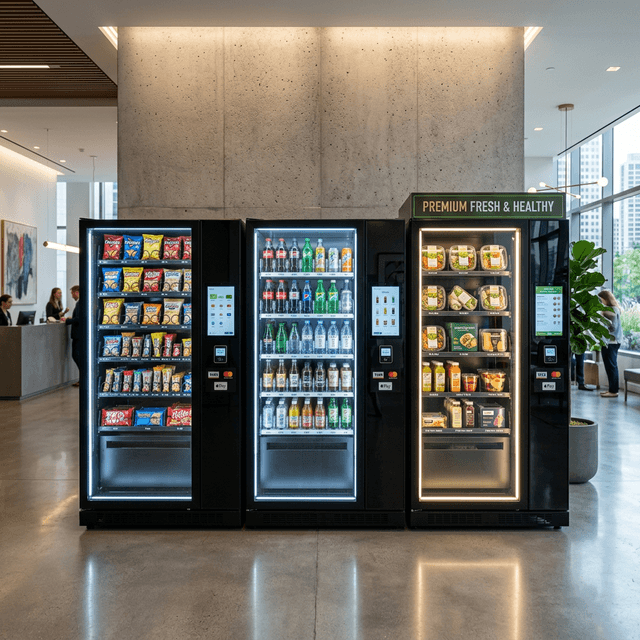
A useful break room starts with the people who use it. A downtown Fort Lauderdale office with hybrid attendance has a different daily rhythm from a Pompano Beach distribution facility, a Hollywood hospitality staff room, or a west Broward business park. Choosing equipment before understanding that rhythm can leave a workplace with too little beverage capacity, too much perishable stock, or a machine that is difficult to service.
This guide is for the person coordinating the decision: a facility manager, property manager, business owner, or HR lead. It offers a way to turn a general request for “better snacks” into a workable site brief. The planning examples are illustrative, not minimum eligibility rules or promises of service. Final equipment, costs, access arrangements, and coverage require a site-specific review.
1. Measure the workday before choosing equipment
Start with typical people on site, not the number on the company roster. Record attendance for each shift on several ordinary days. Separate employees who regularly reach the proposed break room from people working elsewhere in the building. A shared office can have a large tenant population but little traffic through one particular lounge. Conversely, a small facility may have repeat use throughout a long operating day.
Write down arrival times, scheduled breaks, lunch periods, and shift changes. Ask whether people have practical alternatives: an existing cafeteria, a nearby shop, a meal delivery policy, or their own packed lunches. The objective is to understand likely use, not to assume everyone will purchase every day. Include weekend and overnight staff in the conversation; a program designed solely around the day shift can miss the people who need it most.
For an initial worksheet, multiply the people with access by an estimated purchase participation rate, then by purchases per participating person. For example, 80 people, a hypothetical 30 percent participation rate, and one purchase each would mean 24 daily purchases. Those numbers are deliberately assumptions. They are not a forecast, a local statistic, or a qualifying threshold. Make a low and high scenario, explain what you assumed, and replace assumptions with actual sales after launch.
Record seasonal or operational changes separately. A hospitality business may have varying staffing; a warehouse may add temporary shifts; a hybrid office may be busy only on meeting days. Tell the provider about those patterns before discussing restocking. The same weekly total distributed across five days is different from a sharp burst on two days, especially when refrigerated food is involved.
2. Match the format to the workplace
Traditional vending for a contained setup
Snack, drink, and combo vending can work where space is limited or access is shared. Enclosed equipment helps keep products controlled, and a compact arrangement can be easier to accommodate than open shelving. Confirm the actual equipment dimensions, product capacity, door swing, payment methods, and service clearances before deciding that a corner is suitable.
A combo machine is convenient, but convenience does not establish enough drink capacity for a busy shift change. Ask the provider to explain how the proposed layout handles the most frequently purchased items. A separate beverage machine may be worth considering when drinks drive demand. Availability, utility needs, and commercial terms should be reviewed for the specific site rather than assumed from a photograph.
Micro markets for variety and open shopping
A micro market combines shelves or coolers with a checkout station. It can offer a wider range of package shapes and meal options than a conventional machine. That flexibility brings planning responsibilities: controlled access, reliable connectivity where needed, stock rotation, refrigeration management, payment support, and a clear approach to shrink or unpaid items.
Walk through who can enter the space. An employee-only lounge and a public lobby present different conditions. Before selecting an open market, discuss how access is managed, who handles an incident, what signage is required, and whether any monitoring is proposed. Have the appropriate workplace decision maker review privacy and building policies. A market should fit the organization’s operating rules as well as its design preferences.
Coffee, water, and pantry as separate decisions
Coffee service may be the most useful first improvement for an office whose snacks are already covered. Compare brewing style, cup volume, counter space, cleanup, water supply, and the recurring cost of consumables. A premium machine does not remove the need for a person to replenish supplies or keep the area tidy. Confirm which tasks the service agreement covers and which remain with the host.
Water options require their own review of power, plumbing where applicable, filter care, drainage, and accessibility. Pantry service usually means the employer or property pays for refreshments that users take without a retail checkout. Decide whether the budget is per delivery, per month, or tied to consumption, and specify approval rules for substitutions and special orders.
3. Understand what no-cost placement means
No-cost equipment placement can be available for qualifying vending locations where expected purchases support the equipment and route. It is not a promise that every business, building, or headcount qualifies. The review may consider daily participation, hours, location, service access, security, product preferences, and space readiness. A proposal should clearly say whether your particular site qualifies and what the host is expected to provide.
Separate equipment placement from product purchases and optional services. Employees generally pay for items they buy from a retail vending machine or market. An employer-funded pantry, coffee supplies, bottled beverages, water service, or other add-ons may involve recurring charges. Electrical work, plumbing changes, building alterations, or special access requirements should also be discussed before approval. A free quote should clarify these categories without implying that all refreshments are free.
Request written answers to practical questions: Who owns the equipment? Who pays for utilities? Is there a minimum purchase level or subsidy? Who handles normal maintenance? Are there charges for relocation, damage, removal, or cancellation? What happens if attendance falls? Are any commissions proposed, and how are they calculated? Do not infer these terms from a general website phrase; the agreement for your location governs the arrangement.
If several departments share the budget, identify the approver early. HR may choose the benefit, facilities may control the room, finance may approve recurring costs, and a landlord may control physical changes. A simple responsibility list helps prevent the equipment delivery from arriving before anyone has approved the outlet, loading procedure, or ongoing pantry budget.
4. Complete a physical site readiness walk
Measure the proposed area and the entire delivery path. Include entrances, turns, elevators, corridors, thresholds, and doors. Ask for equipment dimensions and handling requirements from the actual model being proposed. Do not rely on a generic machine size. Share elevator booking rules and any weight or loading restrictions with the provider so they can determine a realistic installation method.
Choose a location that is easy to find and naturally used during breaks. Keep circulation paths, exits, emergency equipment, and building access clear. Confirm clear floor space and usable controls with the provider and the appropriate building professional. This guide does not set accessibility or electrical specifications; those depend on the equipment and applicable requirements. A successful fit requires more than being able to push a machine into the room.
Review outlets, electrical capacity, connectivity, temperature, ventilation, and any plumbing needs. Refrigerated equipment may need space around it and a suitable indoor environment. Have qualified personnel evaluate utility changes. Extension cords and improvised drainage should not become the default installation plan. Include nearby furniture and seating in the room drawing so the final arrangement remains usable during busy periods.
Send a few clear photos of the area, access route, and nearby utilities when requesting a quote, if you can do so without exposing confidential workplace information. Avoid photographing employees, badges, security controls, documents, or private screens. A dimensioned sketch and general access notes are often enough to start the conversation. Keep sensitive access instructions for the approved provider coordination process.
Port-adjacent sites need an access plan
For a business inside Port Everglades, access is an operational consideration. The port’s official visitor guidance requires visitors to be invited by a specific port business, tenant, or agency and limits access to the area connected with that business. See the Port Everglades visitor access guidance for current rules. The practical implication is to coordinate service visits with the host before scheduling.
Ask your facility contact to identify required approvals, escorts, permitted service windows, and delivery coordination. Being near the port does not mean a provider is authorized to enter a restricted facility. Similarly, an airport-area workplace should confirm its own landlord or operator requirements. We do not imply an existing relationship with Port Everglades, the airport, their tenants, or government agencies by discussing these planning considerations.
5. Build a product plan people can actually use
Collect preferences through a short staff survey with a few categories: drinks, salty snacks, sweet snacks, filling options, and dietary preferences. Ask for priorities rather than a long wish list of individual brands. Include people from every shift. If the survey only reaches the office team, the product mix may miss the warehouse or hospitality staff who share the room.
Balance familiar products with alternatives. Water, unsweetened drinks, smaller portions, protein snacks, and products with clearly readable ingredient labels can help widen choice. Avoid describing an entire machine as allergy-safe or promising that a product meets every dietary need. Customers should check the actual label, and the site should have a process for reporting missing labels or unclear product information.
For refrigerated meals or fresh food, discuss turnover, expiry checks, storage requirements, temperature monitoring, and who removes products after a disruption. Start with a range that demand can support. Too many slow-moving choices can create waste without improving the experience. Agree how the mix will be adjusted, and record substitutions so an employee expecting one item does not repeatedly find an unrelated replacement.
A sensible review considers availability as well as sales. A best seller that empties early can hide unmet demand; an item that sells slowly might still serve a particular shift or dietary preference. Ask whether the provider can review sell-through and stockouts together. Establish how staff can request a change and how long a trial product will stay before it is reviewed.
Make payments and support clear
Confirm card, mobile wallet, or cash support for the proposed equipment rather than assuming every model supports all methods. Ask how pending authorizations, failed vends, refunds, and connectivity problems are handled. Clear instructions at the machine are more useful than expecting an employee to search the company website while on a short break. Include a machine identifier and the verified support channel in the launch information.
For employer-funded programs, decide how access and consumption are managed. A pantry can be welcoming while still having a budget and a product policy. Communicate what is included, whether visitors can use it, and where requests should go. If the benefit changes, tell users plainly instead of leaving old signs that suggest an item is still employer-paid.
6. Plan service around access and disruptions
Create one operational contact and a backup. Give them responsibility for arranging entry, communicating schedule changes, and receiving maintenance updates. The provider should know about holiday closures, construction, changed parking rules, and elevator outages before a scheduled visit. Keep access permissions current when personnel change. A service arrangement that depends entirely on one person being present is fragile.
Agree on a restocking approach based on demand, capacity, and route feasibility. Frequent small deliveries are not automatically better than fewer well-planned visits. Discuss what happens after an unexpectedly busy week, how service requests are acknowledged, and when a technician can enter the building. Avoid promising immediate replenishment without an agreed process and realistic availability.
Broward County Emergency Management provides official information about local emergency preparation and response through its emergency management portal. For a workplace refreshment program, use the organization’s existing continuity plan to decide who coordinates closure, safe access, refrigeration interruptions, and reopening. Retail vending stock should not replace the workplace’s emergency supplies.
For port facilities, consult the official Port Everglades weather updates during disruptions; the port notes that access may be limited to essential operations when port operations are halted. Your plan should allow service visits to be postponed. After an outage, have the responsible operator assess refrigerated inventory before sales resume rather than assuming it remained suitable.
7. Use a staged launch and a practical review
Before delivery, confirm the approved layout, commercial terms, building permissions, utilities, and installation contact. Schedule a window that fits operations. On installation day, check that the delivered equipment matches the proposal, that doors and walkways remain clear, and that the support information is visible. Have the provider demonstrate payment, normal use, and the process for reporting a problem.
Introduce the program to employees with a brief explanation of what is offered and what users pay for. Include the support process and product request channel. Invite feedback from overnight and weekend users as well as daytime staff. A launch does not need a promotional event to succeed; people primarily need to know where the equipment is, how it works, and who can help.
Review after the first several weeks, using a period agreed with the provider. Compare actual use with the original demand assumptions. Look for repeated stockouts, underused selections, unclear payment instructions, service access problems, and waste from perishables. Choose a few specific adjustments instead of rebuilding the whole program at once. Then review whether those adjustments resolved the issue.
Keep a short decision log. Record the product or equipment change, the reason, the date, and who approved it. This is especially useful for multi-tenant properties or workplaces where managers change. It helps the next person understand why a beverage machine was added, why an item was removed, or why deliveries use a particular entry rather than reopening every decision from scratch.
8. Prepare a quote brief that saves time
Gather the address or general corridor, workplace type, attendance by shift, hours, desired services, target timing, proposed space, and access notes. Include whether the area is employee-only or public and whether the host wants retail purchases or an employer-funded benefit. Mark unknown items as questions. You do not need to solve every detail before starting, but clear basics make the first review more useful.
For a downtown office, the key details might be hybrid attendance and a reserved elevator window. For a coastal hospitality property, they might be staff access and varying shift levels. For an industrial facility, they might be beverage capacity and gate coordination. These are examples of planning questions, not claims about particular local clients. Use the Broward service area pages to explore your corridor and confirm coverage during the quote review.
Ask the provider to explain the recommendation, the eligibility decision, and the costs in plain language. A good proposal connects equipment to demand and access conditions. It should leave you with a workable operating plan, not just a machine photograph. Compare options using the same brief so differences in cost, product range, or service responsibilities are clear.
Ready to plan your workplace? Explore our service options, then check quote availability. When online delivery is available, include your headcount, shifts, and space details. No-cost vending placement is subject to site eligibility. Product purchases and optional coffee, water, or employer-funded pantry services are considered separately in the proposal.
Local source notes reviewed October 5, 2026. Official sources above support access and emergency context; the planning checklists and illustrative demand worksheet are original guidance. Verify current facility rules before arranging a visit.